%20(3).png)
India, Through Its Pickles And the Oil That Holds Them Together
Updated: Apr 14
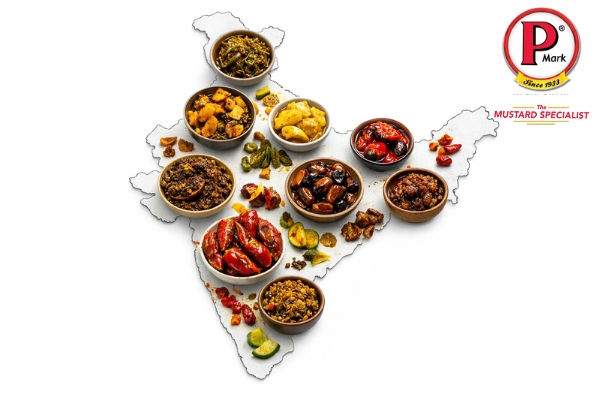
There are few things as quietly consistent across Indian kitchens as a jar of pickle. It sits in corners, on shelves, sometimes forgotten until the simplest meal needs rescuing. A spoonful is enough to sharpen dal-chawal, to bring life to parathas, to complete something that felt almost there. But if you look closely, pickles in India are not one thing. They are as regional as language, as climate, as memory. And yet, across large parts of the country, especially in the North, East, and pockets of the West, there is one constant in these pickles - Mustard oil.
North India: Where Pickles Are Built to Last
In North India, pickles are not rushed. They are assembled, rested, turned, and watched. Raw mangoes in Punjab are cut and salted before being submerged in a spice mix that only comes alive when mustard oil is poured over it, thick, pungent, unapologetic. In Uttar Pradesh, lemons soften under the sun, but it is the oil that seeps in slowly, carrying spices deeper into the peel. Move higher up, and the ingredients change. In Himachal Pradesh, wild fiddlehead ferns, lingdi, are pickled. In Uttarakhand, local lentils find their way into jars. The method, however, remains familiar. Because here, mustard oil doesn’t just coat. It seals, protects, and allows time to do its work.
West India: Preservation in a Harsh Landscape
In Rajasthan, where the climate demands ingenuity, pickles are made from what survives the desert, ker and sangri. These are not delicate ingredients. They are resilient, textured, and deeply tied to the land they come from. Mustard oil, in this context, is not just a flavour choice. It is functional. It withstands heat. It resists spoilage. It holds everything together in a place where preservation is not optional. And yet, even here, it does more than preserve. It gives character to something that could have remained purely practical.
East India: Where Mustard Oil Becomes Identity
If there is one part of India where mustard oil moves beyond function, it is the East. In Bihar, stuffed red chilli pickles carry a sharpness that feels incomplete without the oil’s bite. In West Bengal, kuler achaar made from Indian jujube balances sweet and spice, but it is mustard oil that anchors it, preventing it from tipping too far in either direction. Odisha’s tamarind pickles bring tang, Assam’s bhoot jolokia brings heat, but both rely on the same foundation. Here, mustard oil is not added at the end. It is built into the very idea of what a pickle should taste like.

Across Regions, A Familiar Instinct
Travel across India, and ingredients shift. Techniques evolve. Flavours take on new identities. But the instinct remains the same. To preserve what is seasonal, to deepen flavour over time, to create something that lasts. And in many of these kitchens, past and present, mustard oil continues to be part of that process. Not always loudly. Not always in the same way. But consistently enough to leave a mark.
More Than an Ingredient
Mustard oil does many things at once. It creates a barrier against air and moisture, helping pickles last longer. It carries spices deeper into whatever it touches. It brings its own sharp, unmistakable character. But beyond all of this, it does something harder to define. It gives pickles a certain boldness. A refusal to be mild. A willingness to linger, which is the very essence of pickles.
A Common Thread, Not a Uniform Taste
What’s remarkable is not that pickles across India taste the same; they don’t. A mango pickle in Punjab will never taste like a chilli pickle in Bihar. A ker sangri achaar will never resemble kuler achaar. And yet, there is a shared rhythm. To preserve. To intensify. To let time transform something simple into something layered. Mustard oil, in its own way, becomes part of that rhythm.


Comments