%20(3).png)
Why Mustard Oil Suits the Desert Climate
From the sun-baked landscapes of Rajasthan to the kitchens that have adapted to life in dry, demanding conditions, food traditions often reflect the environment around them. In desert and semi-arid regions, where water is scarce, temperatures can be extreme and fresh produce may not always be readily available; cooking has historically relied on ingredients that are practical, flavourful and well suited to local agriculture.
Mustard oil fits naturally into this story. It is not simply a traditional cooking medium- it is connected to a crop that has long been cultivated across parts of Rajasthan and other semi-arid regions, while its bold flavour works particularly well with the spices and hearty foods associated with desert cuisine.
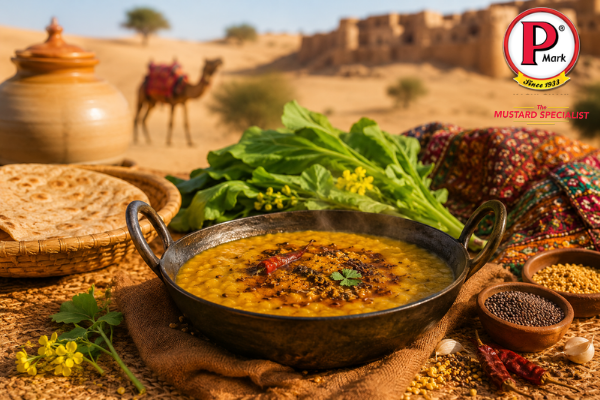
A Crop That Thrives in Dry Regions
The relationship between mustard and Rajasthan begins in the field. Rajasthan is one of India's major mustard-growing regions, and research has specifically examined mustard cultivation under the state's arid and semi-arid conditions. Mustard (Brassica juncea) is considered particularly suitable for these environments, where farmers contend with limited irrigation, erratic rainfall and challenging soils. The ICAR-Directorate of Rapeseed-Mustard Research also lists several Indian mustard varieties specifically recommended for Rajasthan, including varieties suited to rainfed conditions. This makes mustard an important part of the agricultural landscape—and naturally, its oil has found its way into local kitchens.
Mustard Oil - A Natural Match for Traditional Desert Cuisine
Rajasthani food is known for making the most of ingredients that are practical to store and use in a demanding climate. Dishes such as dal, baati, gatte, ker sangri and bajra-based preparations are built around robust ingredients and powerful seasoning. Mustard oil complements this style of cooking beautifully. Its distinctive pungency adds depth to dals, vegetables, pickles and curries, while its strong aroma pairs naturally with spices such as cumin, coriander, chilli and asafoetida. In other words, mustard oil doesn't simply disappear into a dish—it becomes part of its character.
Mustard Oil -Flavour That Works With Bold Spices
Desert cuisine doesn't shy away from flavour.When mustard oil is heated before cooking, its characteristic sharpness mellows and its aroma becomes more rounded. This makes it particularly effective for tadkas, tempering spices and cooking preparations where a little extra depth can make a noticeable difference. That's why mustard oil has traditionally worked so well with the intense spice profiles found across northern and western India. A simple bowl of dal, for example, can take on an entirely different character with a mustard-oil tadka of cumin, garlic and dried chillies.
A Source of Unsaturated Fats
There is also a nutritional reason mustard oil continues to attract attention. Mustard oil contains both monounsaturated and polyunsaturated fatty acids, including alpha-linolenic acid (ALA), an omega-3 fatty acid. Research reviewing edible oils in the Indian context has highlighted mustard oil's relatively high MUFA and PUFA content and its presence of ALA.
From Desert Fields to Indian Kitchens
There is something particularly fitting about an ingredient whose agricultural roots are so closely connected to the landscape where its culinary traditions developed. Mustard grows across parts of Rajasthan's challenging agricultural environment, and its oil has become deeply woven into the food culture of the region. From a fragrant tadka to a traditional pickle or a hearty vegetable preparation, mustard oil brings together agriculture, climate and culinary heritage in one ingredient.
Conclusion
Mustard oil's connection with desert and semi-arid regions is more than coincidence. The mustard crop is well established in Rajasthan's agricultural landscape, including areas where farming must adapt to limited water and challenging conditions. At the same time, its bold flavour makes it an excellent companion to the spices, grains and hearty preparations that define regional cuisine.


I found the discussion about mustard oil and desert climates very interesting because it explains how local conditions influence everyday choices. Understanding these connections helps people make better decisions in different situations. During a demanding semester, I was searched for pay someone to take my math class while managing several commitments at once. Finding suitable support and staying organized can make busy periods much easier to handle. Nice post your post makes me smile.