%20(3).png)
Role of Mustard Oil in Buddha Purnima
- May 1
- 3 min read
Buddha Purnima, one of the most serene and spiritually significant days in the Buddhist calendar, marks the birth, enlightenment, and passing of Gautama Buddha. Observed across India and many parts of Asia, the day is defined not by grandeur, but by reflection, mindfulness, and a deep awareness of life’s transient nature.
Temples glow softly with lamps, prayers echo gently, and homes embrace simplicity. Among these subtle rituals and stories, mustard oil finds a quiet yet meaningful place—woven into symbolism, spiritual teachings, and everyday practices.
In this blog, we explore the deeper connection between Buddha Purnima and mustard oil—from ancient teachings to modern-day rituals and food traditions.
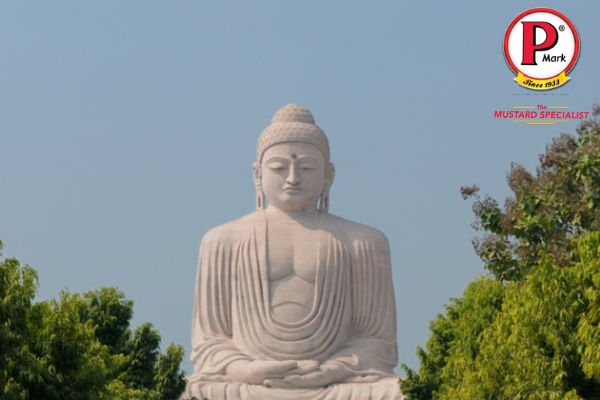
Mustard Oil in Rituals & Symbolism
The Story of Kisa Gotami (Mustard Seeds): One of the most profound associations of mustard with Buddhism comes from the story of Kisa Gotami. After losing her child, she approached the Buddha in grief. He asked her to bring a handful of mustard seeds from a household that had never experienced death. As she went door to door, she realised that suffering and loss are universal. This story became a powerful teaching on impermanence (anicca)—a core principle of Buddhism. On Buddha Purnima, this story is often remembered, giving mustard seeds a deeply symbolic meaning.
Lighting of Diyas: Lighting diyas is a meaningful ritual on this day, symbolising the journey from ignorance to enlightenment. In many Indian homes, mustard oil is traditionally used for these lamps—its steady, unwavering flame reflecting focus, clarity, and inner balance, values closely aligned with Buddhist philosophy.In regions like Ladakh, households often use P Julley Mustard Oil to light diyas, valued for its purity and smoke-free, clean burn.
Symbol of Purity & Awareness: In modern interpretations, mustard oil is often seen as a symbol of purity and simplicity. Just as the Buddha’s teachings emphasize clarity of mind and intention, mustard oil—unrefined and rooted in tradition—reflects a similar sense of authenticity and grounding.

Traditional Food & Offerings on Buddha Purnima
Unlike festivals centred around elaborate feasts, Buddha Purnima embraces simplicity in both thought and food. Meals prepared on this day are often light, balanced, and mindful—reflecting the principles of moderation and awareness.
While mustard oil isn’t the centrepiece of indulgent spreads, it continues to play a role in everyday cooking, especially in regions like Bengal, where it is a staple.
Here are some simple, culturally relevant dishes:
Khichdi: A nourishing combination of rice and lentils, often prepared as a light meal or offering. A touch of mustard oil adds warmth while keeping the dish grounded and simple.
Luchi / Puri (Mustard Oil-Fried): In some regional traditions, especially in Eastern India, puris may be fried in mustard oil, adding a distinct flavour while still being part of a minimal, home-style meal.
Seasonal Vegetable Sabzi: Lightly sautéed vegetables cooked in mustard oil with minimal spices—allowing natural flavours to shine while keeping the meal sattvic and balanced.
Fruits & Simple Sweets: Offerings often include fruits or rice-based desserts like kheer, emphasising nourishment without excess.
The Symbolism of Mustard Oil in This Context
Mustard oil, in the context of Buddha Purnima, is not about boldness or indulgence—it’s about quiet presence.
It appears in a story that teaches impermanence
It fuels a flame that represents awareness
It supports food that reflects simplicity
In many ways, it mirrors the essence of the day itself—subtle, grounded, and meaningful.
Conclusion
Buddha Purnima reminds us that the deepest truths often come from the simplest moments—a story, a flame, a quiet meal.
Through the story of Kisa Gotami, the soft glow of a diya, and the understated presence of mustard oil in everyday rituals, we are reminded of life’s most important lesson: everything is temporary, and in that awareness lies peace.
This Buddha Purnima, embrace the stillness. Light a lamp, reflect on the story, and find meaning in the simplest of traditions. 🪔✨


Comments